



Is Trenchless Pipe Replacement Right for Your Property?
Not every failing line is a candidate, and honest trenchless work starts by admitting that. We check the pipe’s route, depth, material and condition. Then we explain whether a low-dig approach makes sense for your property. You get the findings before you agree to the work.
Ideal for:
- Lines running beneath a driveway or parking area
- Pipes under patios, decking or paved surfaces
- Established lawns and mature landscaping
- Properties where excavation access is restricted
- Older lines already failing in more than one spot
Signs You May Have a Damaged Sewer Line
A single slow drain may simply need cleaning. However, problems across several fixtures can point to trouble in the main line. Watch for recurring backups, gurgling drains, sewage odors or wet patches in your yard.
These signs do not always mean you need a new pipe. For example, a blockage may cause similar symptoms. Our sewer line inspection and replacement service helps identify the cause before you commit to a major repair.
How Trenchless Methods Work
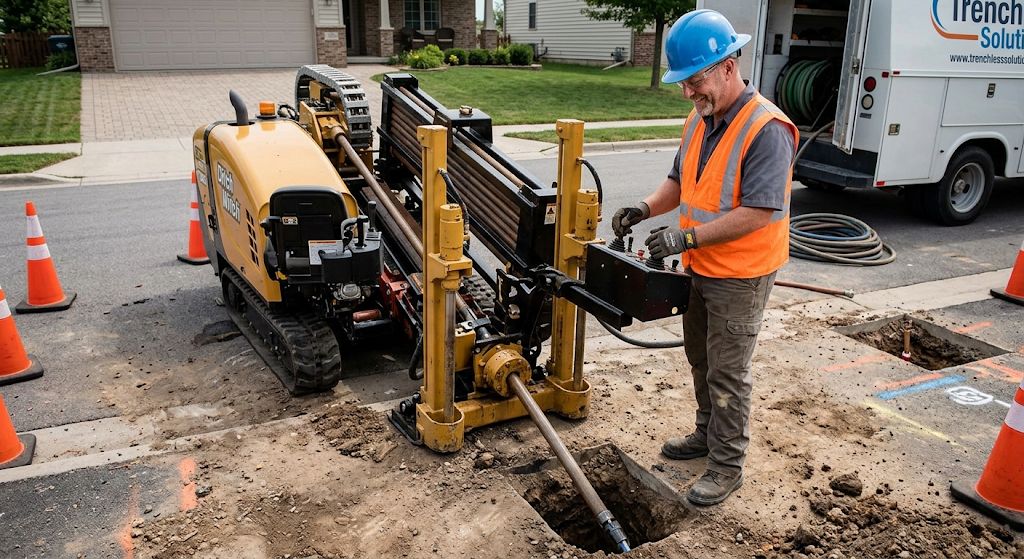
Trenchless sewer replacement uses access points to reach the buried pipe. In general, pipe bursting breaks apart an old pipe while pulling a new one into place. In contrast, pipe lining creates a new inner surface within the existing pipe. Lining is a form of rehabilitation rather than full pipe replacement.
The right approach depends on the damage and the layout of the line. For instance, a severe collapse or tight bend may call for open digging. Ask our team which methods are available for your specific job.
What Happens From Assessment to Finished Line
We follow a clear process based on what the inspection reveals.
- Camera survey. First, we check the existing line to identify damage and assess its route and depth.
- Suitability check. Next, we explain whether a trenchless approach or open excavation fits your line.
- Access plan. We show you where we expect to dig and how we plan to reach the pipe.
- Written quote. Before work starts, we explain the scope, price and expected timeline.
- Installation. We install the new line through the agreed access points where conditions allow.
- Final testing. Finally, we check flow, close the access areas and make them good.
Learn more about our plumbing service process before you book.
Benefits of Less Digging
Less digging may help you avoid extra work after the pipe replacement.
- Protect hard surfaces. For example, you may avoid cutting across a driveway or patio.
- Save existing landscaping. Your lawn, garden beds and trees may need less restoration.
- Reduce disruption. Smaller work areas may help you regain normal access sooner.
- Compare total costs. Include the cost of restoring pavement and landscaping when you weigh your options.
- Replace a failing line. Where full replacement makes sense, a new pipe addresses the worn line rather than just one damaged spot.
Why Turlock Homeowners Trust Us With Trenchless Work
Sal’s Plumbing Service has served Turlock since 2019. We focus on honest findings, clear pricing and work that fits the condition of your line.
If your pipe is not a good candidate, we will explain why. Also, we will discuss other options before you make a decision. We serve homes and businesses in Turlock and across our Stanislaus County service area.
Common Questions About Trenchless Work
How much does the work cost in Turlock?
The price depends on pipe length, depth, damage and access. In addition, the method affects the cost. A low-dig job may cost more upfront but save on yard or driveway repairs. We explain the price before work begins.
Is my pipe suitable for trenchless replacement?
We check the pipe route, material, depth and condition first. Severe damage or sharp bends may rule out a low-dig approach. Therefore, we need to inspect the line before we can recommend a method.
How long does the work take?
Many residential jobs take one to two days once work begins. However, a long run or difficult access can take more time. We explain the expected schedule with your quote so you can plan ahead.
Does trenchless work mean no digging at all in my yard?
No. We still need access to the pipe, so some digging may be necessary. However, the goal is to avoid a continuous trench along the entire run. We explain where we expect to dig before the work starts.
How is trenchless different from standard sewer line replacement?
Standard replacement usually involves opening the ground along the pipe route. By contrast, a low-dig approach uses smaller access areas where the site allows. The condition of your line helps us decide which option fits.
Find Out Whether Trenchless Will Work on Your Line
Book an assessment and you will get an honest answer on suitability, method and cost. If trenchless is not right for your property, you will hear that too.