
Water Heater Leaking From Bottom: Causes and What to Do Next
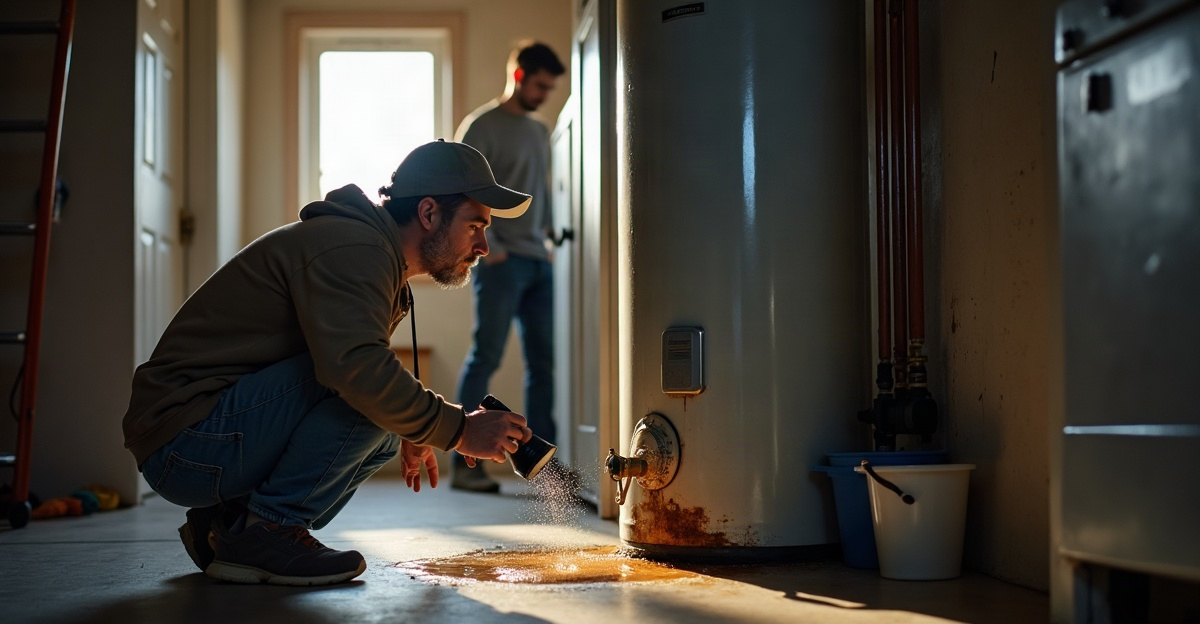
A water heater leaking from the bottom may result from condensation, a loose fitting, a failing drain valve, pressure issues, or a corroded tank. We should turn off power to an electric unit before taking action. We should also stop the water supply if it’s safe. A qualified plumber can identify the leak source and recommend the right repair.
Key Takeaways
- Water at the base may come from the tank, pipes, valves, the relief discharge pipe, or a nearby plumbing problem.
- Active leaks, flooding, visible corrosion, gas odors, or electrical hazards require prompt professional service.
- Drain valves, supply connections, and certain pressure-related issues may allow repairs.
- A rusted-through, cracked, or internally corroded tank usually needs replacement. A patch or sealant won’t provide a lasting fix.
- Regular inspections, clear space around the unit, and proper maintenance can help us spot leaks early.
What to Do Right Away When a Water Heater Is Leaking
An active water heater leaking from bottom of the tank is a property-damage concern. Water can soak flooring, drywall, cabinets, and anything stored nearby. Move belongings away from the water if it is safe to do so.
Use towels, a shallow pan, or a wet/dry vacuum to control the water only when there is no electrical hazard. If water is near outlets, cords, or the unit’s wiring, stay back.
Safety Steps by Water Heater Type
- Electric water heater: Turn off power at the circuit breaker before shutting off water or attempting to drain the unit. Do not remove electrical access panels, test live wiring, or remove heating elements.
- Gas water heater: Do not try to relight the pilot, adjust gas controls, or work on gas connections.
- Any water heater: Shut off the cold-water supply valve when the leak is substantial or ongoing, if the valve can be reached safely.
Leave the area immediately and contact the gas utility or emergency services if there is a gas smell, hissing near a gas line, or any concern about carbon monoxide. Do not use flames or operate electrical switches near a suspected gas leak.
Contact a qualified plumber promptly for active leaks, flooding, visible tank corrosion, or uncertainty about the source. If a leaking hot water heater needs attention in Turlock, Modesto, Merced, or a nearby Central Valley community, Sal’s Plumbing Service can inspect the source, explain the options, and recommend the most practical repair or replacement. Our water heater repair and replacement service starts with finding the cause.
How to Safely Find Where the Water Is Coming From
Water found at the bottom of a water heater does not always mean the tank itself has failed. Several sources can leave water under the water heater, and some are simple to fix.
To narrow down the source safely:
- Dry the area if it is safe, then watch where new water appears.
- Use a flashlight to inspect visible fittings and pipes above and around the unit.
- Follow any water trails up the pipes or down the side of the tank.
- Note whether water appears only during heating cycles or when hot water is in use.
- Check whether water is dripping from above the unit, flowing from the discharge pipe, or collecting from a nearby appliance, drain line, roof leak, or plumbing pipe.
Do not dismantle gas controls, relief valves, sealed tank components, electrical panels, or heating elements to find the source. These parts control pressure, heat, fuel, and power, and they need proper training to service.
An exact diagnosis often requires a plumber, especially when the source is hidden or the leak is ongoing. Professional water heater leak detection looks at the tank, valves, connections, and surrounding plumbing together.
Why Is My Water Heater Leaking From the Bottom?
Condensation on the Tank or Pipes
Condensation can form in humid conditions or when cold water enters the unit. The moisture runs down and collects at the base, which can make it look like the water heater is leaking. It usually shows up as light dampness rather than a steady drip, but the source should still be checked.
A Leaking Drain Valve
The drain valve sits near the bottom of the tank. Water may drip from it if the valve is loose, worn, damaged, or not fully closed. A leaking drain valve is one of the more common and more repairable causes.
Loose or Leaking Connections Above the Water Heater
Water from a loose fitting or supply connection on top of the unit can travel down the pipes or the tank body and pool at the base. The leak starts above, but the water shows up below.
Temperature-and-Pressure Relief Valve or Discharge Pipe Issues
The temperature-and-pressure relief valve releases water if the tank gets too hot or the pressure gets too high. Water from the discharge pipe may indicate a valve problem, excessive pressure, overheating, or thermal expansion. Thermal expansion happens when heated water expands and has nowhere to go.
The relief valve is a safety device. It should never be plugged or capped. A professional should diagnose why it is discharging rather than simply replacing the valve.
Internal Tank Corrosion, Rust, or a Cracked Tank
Over time, the inside of a steel tank can corrode. Rust can eat through the tank wall, or the tank can crack. A water heater tank leak caused by rust-through or a crack is usually a replacement issue.
Water From an Appliance, Drain Line, Roof Leak, or Nearby Pipe
Sometimes the water heater is not the source at all. Water may collect beneath the unit from a nearby appliance, drain line, roof leak, or plumbing pipe, simply because the heater sits at a low spot.
Warning Signs That Point to a Bigger Problem
- Rusty or discolored hot water.
- Visible corrosion on the tank or fittings.
- Leaks that keep coming back.
- Water pooling beneath the tank.
- Rumbling, popping, or banging noises.
- Reduced hot-water capacity or inconsistent temperatures.
Noises often come from sediment buildup. Our guides on water heater noises and water heater sediment explain what those signs can mean.
When a Water Heater Leak Can Be Repaired, and When Replacement Is the Better Choice
Often Repairable
- Drain valves.
- External fittings and supply connections.
- Pressure-related problems.
- Some relief-valve-related issues, when they are diagnosed correctly.
Usually Requires Replacement
A leaking water heater tank caused by internal corrosion, rust-through, or a crack. A corroded or cracked water heater tank generally cannot be reliably repaired and usually needs replacement. Sealants and patches may slow a leak for a short time, but they are not a dependable long-term fix for a failed tank.
Water Heater Replacement Signs
- Rusty or discolored hot water.
- Water pooling beneath the tank.
- Visible corrosion on the tank body.
- Recurring leaks or repeated repairs.
- Rumbling, popping, or banging noises from sediment buildup.
- Reduced hot-water capacity or inconsistent temperatures.
- Advanced age, particularly when the unit is approaching or beyond its expected service life.
Before recommending repair or replacement, a plumber should assess the leak source, the tank’s condition and age, water quality concerns, the safety components, and the surrounding plumbing. That full picture helps avoid paying to repair a unit that is close to failing.
What Affects Water Heater Repair and Replacement Costs?
Repair and replacement costs vary from job to job. The main factors include:
- Water heater type, capacity, and fuel source.
- Tank versus tankless design.
- How easy the unit is to access.
- Permit requirements and any needed code upgrades.
- Venting requirements.
- The extent of any water damage.
- Labor and the condition of the surrounding plumbing.
A small external fitting or drain-valve repair is usually less involved than a replacement caused by a failed tank. An inspection is needed for an accurate estimate.
Water heater replacement in California may involve permits, seismic strapping, drain pans, expansion tanks, venting requirements, and other installation considerations, depending on the property and jurisdiction. Requirements vary by city and county, so a licensed plumber should confirm what applies to the specific home or building.
At Sal’s Plumbing Service, we explain the cause, outline practical options, and provide clear recommendations without pressure. We provide water heater repair and replacement throughout the area, including Modesto, Merced, and Ceres.
How to Help Prevent Future Water Heater Leaks
- Schedule periodic inspections and address minor leaks quickly, before they cause water damage.
- Watch for corrosion, rust-colored water, moisture around fittings, unusual noises, and reduced hot-water performance.
- Maintain clear space around the unit so leaks and corrosion are easier to notice.
- Ask a plumber about flushing, anode rod condition, expansion control, and pressure-related concerns.
Flushing schedules are not one-size-fits-all. A plumber can recommend maintenance based on the unit’s age, condition, and local water quality.
Water Heater Leak FAQs
Is a water heater leaking from the bottom an emergency? An active or substantial leak, flooding, visible corrosion, a gas odor, or an electrical hazard requires prompt professional attention.
Can a leaking water heater be repaired? External valves, fittings, and connections are often repairable. A rusted-through or cracked tank usually needs replacement.
Why is my water heater leaking from the drain valve? The valve may be worn, loose, damaged, or not fully closed.
How do I stop water from leaking from the bottom of my water heater? For an electric unit, shut off power at the breaker first. Shut off the cold-water supply if it is safe to reach, and contact a qualified plumber for an active leak.
Should I turn off my water heater if it is leaking? Turn off electrical power at the breaker for an electric unit. Do not alter gas controls on a gas unit unless directed by a qualified professional or the utility provider.
How long does a water heater typically last? Service life varies by unit type, water conditions, maintenance, installation quality, and usage. Many tank-style units last roughly 8–12 years. Advanced age is one factor in replacement decisions.
Can condensation make it look like my water heater is leaking? Yes. Condensation on the tank or pipes can create water at the base, but the source should still be checked.
Sal’s Plumbing Service helps homeowners, landlords, property managers, and business owners in Turlock, Modesto, Merced, and nearby Central Valley communities identify the source of a leaking hot water heater and choose a practical repair or replacement option. Contact us to schedule an inspection, or visit our plumbing FAQs for answers to other common questions.
By Sal’s Plumbing Service | Reviewed by our experienced plumbing service team